
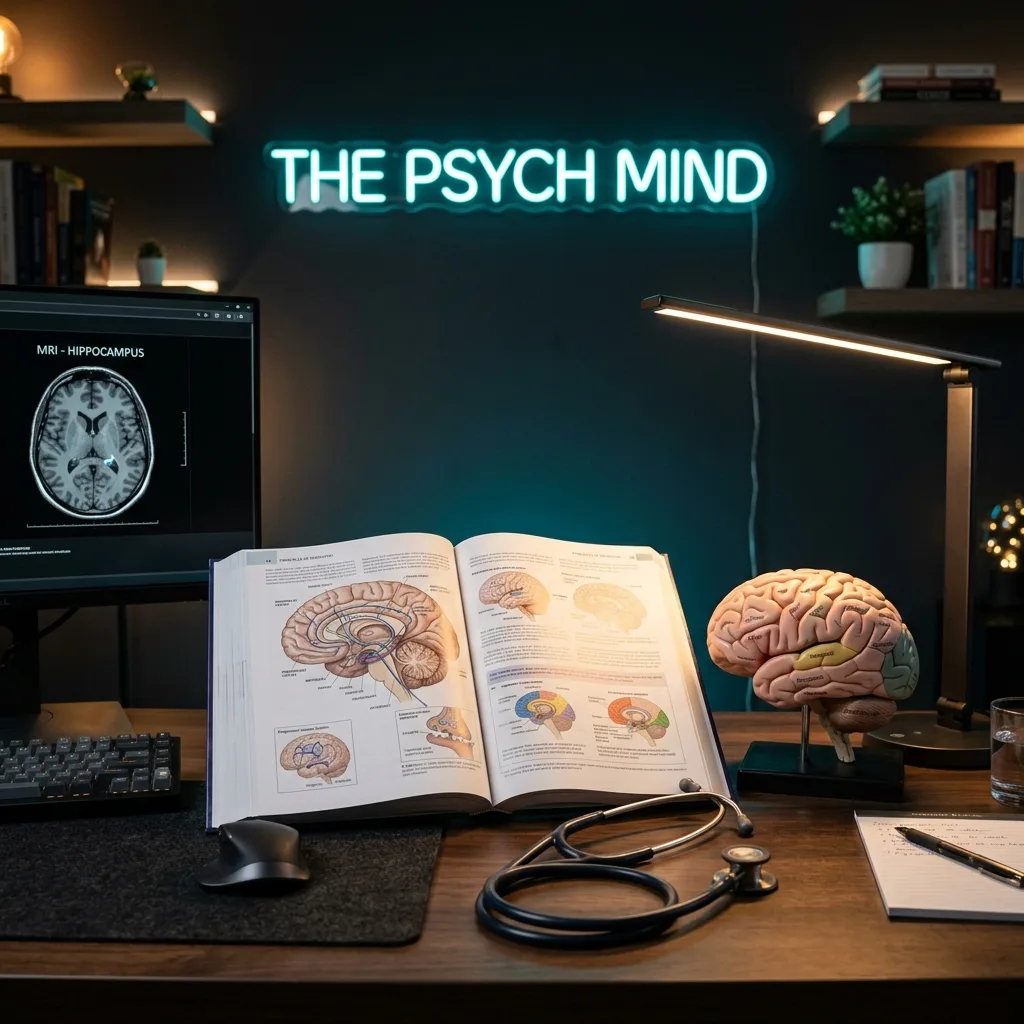
MRCPsych Paper A is the first written exam in the Royal College of Psychiatrists' qualification pathway — and for many candidates, the one that sets the tone. Pass it confidently and you build momentum. Underestimate it and you may find yourself resitting while your peers move on to Paper B.
This guide covers everything you need: the syllabus broken down by domain, which topics carry the most marks, how to approach EMIs strategically, what IMGs specifically need to watch out for, and a realistic 10-week study plan.
What is MRCPsych Paper A?
Paper A tests the basic sciences underpinning psychiatry. Unlike Paper B (which tests clinical knowledge), Paper A is about the why behind clinical practice — the neurobiology, pharmacology, psychology, and statistical principles that inform what psychiatrists do.
✓ Questions: 150 (MCQs + EMIs)
✓ Duration: 3 hours
✓ Pass mark: ~60–65%
The Six Domains — and How to Prioritise Them
The exam is divided into six curriculum domains. Not all domains are equal in weighting:
Clinical Psychopharmacology [High yield]
The most memorisation-heavy domain. Receptor profiles, mechanism of action, side effect profiles, and drug interactions are all fair game. Learn these systematically — flashcards work well.
Basic Neurosciences [High yield]
Neuroanatomy, neurophysiology, neurotransmitter systems. Focus on the limbic system, basal ganglia, HPA axis, and sleep physiology.
Classification and Assessment [Medium yield]
ICD-11 diagnostic criteria, psychiatric rating scales (PANSS, HAM-D, MMSE, etc.), and the principles of psychiatric assessment. Comparisons between ICD-11 and DSM-5 are frequently tested.
Principles of Evaluation and Psychometrics [Medium yield]
Sensitivity, specificity, PPV, NPV, likelihood ratios, reliability, validity. These also appear heavily in Paper B critical review — learn them once, benefit twice.
Human Development [Medium yield]
Developmental milestones, attachment theory (Bowlby, Ainsworth), adolescent development, grief and bereavement. Many candidates underrevise this — don't.
Behavioural Science and Socio-cultural Psychiatry [Lower yield]
Learning theory (classical/operant conditioning), social psychology, epidemiology of mental illness. Worth knowing but lower yield than pharmacology.
EMI Strategy — Where Most Marks Are Won or Lost
Extended Matching Items (EMIs) are disproportionately important in Paper A. Unlike MCQs (where guessing gives you a 20% chance), EMIs require you to actually know the material. Here is how to approach them:
💡 Pro tip: Read the instruction carefully — EMIs often say "select the MOST appropriate" or "select TWO options". Missing this costs marks.
💡 Pro tip: Cover the options first — Read the stem and generate your answer before looking at the option list. This prevents you from being drawn to plausible distractors.
💡 Pro tip: Recognise theme patterns — Common Paper A EMI themes: receptor mechanisms, drug side effects, neurotransmitter systems, diagnostic criteria, statistical tests, research designs.
💡 Pro tip: Don't change your first answer — Unless you have a clear reason, your first answer is usually correct. Changing answers in EMIs based on "gut feeling" leads to more errors, not fewer.
IMG-Specific Advice
⚠ If you qualified outside the UK, read this
- The exam tests UK-specific classifications and guidelines. Know ICD-11 (not DSM-5) as the primary system.
- Psychopharmacology questions are based on BNF guidance and NICE recommendations — not generic international practice.
- The statistical/psychometrics section (evaluation and psychometrics) is unfamiliar to many IMGs — do not underestimate it.
- Practice with UK-style MCQs. "Best of five" questions test nuance, not just factual recall — the distractors are often partially correct.
10-Week Study Plan
Weeks 1–2: Psychopharmacology — receptor profiles, antipsychotics, antidepressants, mood stabilisers, anxiolytics. Flashcard drills daily.
Weeks 3–4: Neurosciences — neuroanatomy, neurotransmitters, sleep physiology, HPA axis. Diagram-based learning.
Week 5: Human development — milestones, attachment, adolescence. Shorter module, build momentum.
Week 6: Classification and assessment — ICD-11 criteria for major disorders, rating scales, diagnostic principles.
Week 7: Psychometrics and evaluation — reliability, validity, sensitivity/specificity, research designs.
Week 8: Behavioural science — conditioning, social psychology, epidemiology basics.
Weeks 9–10: Timed mock exams. One full mock every 2–3 days. Review every wrong answer. Focus on EMI themes you keep missing.
Final Tips
✓ There is no negative marking — attempt every question, even if you are unsure.
✓ Time: roughly 1.2 minutes per question. Do not spend more than 2 minutes on any single question.
✓ Do at least 5 full timed mock exams before the real sitting.
✓ Review your wrong answers more than once — the same themes recur across mock exams and real papers.
✓ Sleep properly the week before the exam. Fatigue destroys performance on recall-heavy questions.
► Psychgateway has 2,000+ Paper A MCQs, EMIs, and 19 full timed mocks — all with detailed explanations. Visit psychgateway.com